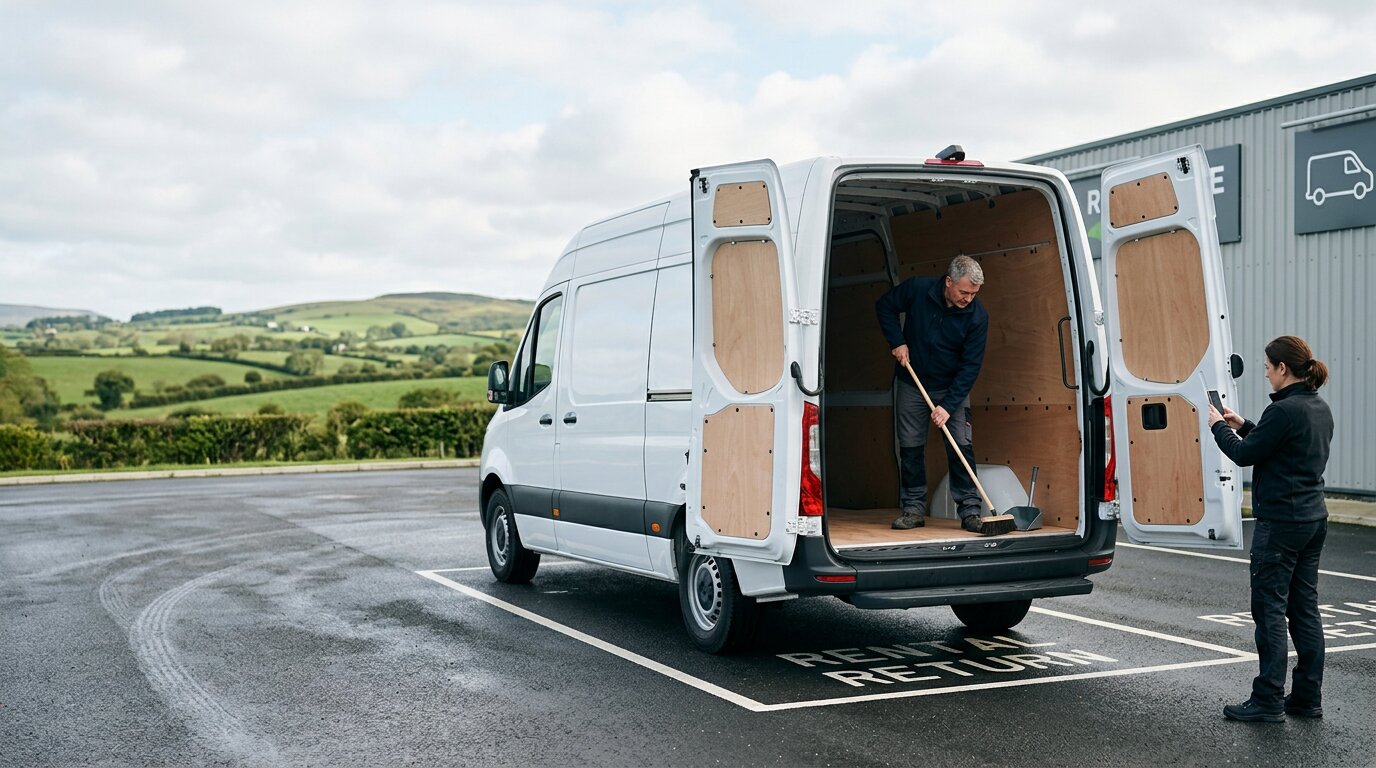

Most people asking this question want a simple rule, so here it is. A hired van normally needs to come back in roughly the state it went out in, allowing for ordinary road dirt. Nobody expects a showroom finish. What gets people charged is the stuff that takes a valeter real time to fix: mud packed into the load floor, rubbish in the cab, spills, smells and anything left behind.
The exact standard isn’t set by custom, though. It’s set by your hire agreement, and that’s where the cleaning questions start.
Read the agreement before you pick up a sponge
Washing a car properly and meeting a contract are two different jobs. Car-care habits are about protecting paint. A hire return is about matching whatever the paperwork says. Look for four things in the terms or ask at the counter:
- Is there a cleaning or valeting charge, and what triggers it?
- Does “clean” mean the outside too, or just the cab and load area?
- Who inspects the van, and are you allowed to be there when they do?
- What happens if you drop the keys off out of hours?
Big rental brands publish their own version of this. Budget’s customer FAQ, for instance, says it won’t charge for normal wear and tear but may charge for professional valeting if the dirt is excessive. Smaller firms might not write anything down, so ask, and get the answer in a text or email if you can.
Clear the load area first
The back of a van is where charges come from, because it takes the most abuse. Do this before any washing, while there’s still daylight.
- Take out every strap, blanket, bag of screws and bit of packaging. Check the corners and behind any bulkhead.
- Sweep or vacuum the floor. Grit left on a ply floor or rubber mat gets ground in with the next load.
- Look for anything that has leaked: paint, oil, garden waste, soil. Deal with it now rather than hoping it dries unnoticed.
- Check the cab: door pockets, under the seats, the glovebox, the sun visors. Phone chargers and sunglasses are the usual casualties.
Have you carried rubbish or garden waste? Don’t leave bags in the van for the hirer to get rid of. Take them home or to your council’s recycling centre, and check the site’s rules for vans before you go, because they vary from council to council.
Wash it without damaging anything, or polluting anything
If the outside is properly muddy, a wash before return is sensible. A few habits help on a van you don’t own:
- Use a proper vehicle shampoo rather than washing-up liquid or household cleaners, and keep scourers away from plastic trim.
- If you use a pressure washer, keep it a sensible distance from door seals, lights and any stickers or signwriting.
- Don’t hose out the inside. Wipe the cab surfaces and vacuum the seats instead.
- Dry the glass and mirrors so they’re easy to inspect at handover.
Where you wash matters in Northern Ireland too. The Northern Ireland Environment Agency’s guidance on the proper use of drains says not to send vehicle washings down a storm drain. Those drains carry water to rivers untreated, and some are marked with a yellow fish. A commercial car wash or jet-wash bay connected to the foul sewer is usually the simpler option, and for a large van it’s often quicker anyway.
Record the condition: before and after
Most advice on returning hire vehicles stops at “tidy it up”. The part that actually protects you is evidence. Take photos when you collect the van, and take the same photos again when you return it, from the same angles. If nobody’s there to check the van in, photograph it at the drop-off point, keys included.
Here’s a simple plain-text log you can copy into your phone’s notes app:
VAN RETURN PHOTO LOG
Registration: ____________   Hire ref: ____________
Collected: date ______ time ______ mileage ______ fuel ______
Returned:  date ______ time ______ mileage ______ fuel ______

Photo set (take at collection AND return):
[ ] Front, straight on        [ ] Rear, doors closed
[ ] Nearside full length      [ ] Offside full length
[ ] Each corner, close up     [ ] Windscreen
[ ] Load floor, doors open    [ ] Load walls and roof lining
[ ] Cab seats and footwells   [ ] Dashboard (mileage + fuel)

Existing marks noted at collection: ____________________
Who checked the van in: ________   Written OK received? Y / N
Keep the photos until the deposit has come back in full and any final statement has arrived. Most phones store the date and time in each photo automatically, which helps if a charge is ever disputed. If a disagreement can’t be settled with the hirer directly, the BVRLA’s dispute resolution service can review it, but only for its member companies and only once the member’s own complaints process has been used. Ask whether your hirer is a member when you book.
Ask about return arrangements where you’re hiring
The questions above work anywhere, but the answers differ between firms and depots. If you’re hiring in either of these areas, these are two enquiry options to ask directly.
Ballymena
Website: van hire information for Ballymena
Location named on the page: Ballymena. Van types listed range from small vans to Lutons, dropsides and tippers.
What to ask: The page says vans are cleaned and inspected before they leave, but it doesn’t publish return-cleaning terms. Ask what condition they expect back, whether there’s a valeting charge, and whether you can be present for the return inspection.
Derry / Londonderry
Website: the Derry / Londonderry van hire enquiry page
Location named on the page: Derry / Londonderry, with delivery and collection described as needing advance booking.
What to ask: If the van is being collected from you rather than returned to a desk, ask who carries out the inspection, when it happens and how you’ll be told the result. That’s the point at which your own photos matter most.
The ten-minute version
If you only have ten minutes before the return slot, spend them on these, in this order: empty the load area completely, sweep the floor, clear the cab, then take the photo set. A slightly dusty van with a clear photo record is in a better position than a gleaming one with none.
